
Elbow Pain Is Limiting What You Can Do.
Let's Find Out What May
Be Contributing.
Pain on the outside or inside of the elbow can develop with sports, gripping, lifting, repetitive work, or gradual tendon overload. Our first goal is to understand which structures and movement patterns may be contributing before discussing appropriate options.
Serving Raynham, MA and Southeastern Massachusetts.

What Could Be Contributing to Your Elbow Pain?
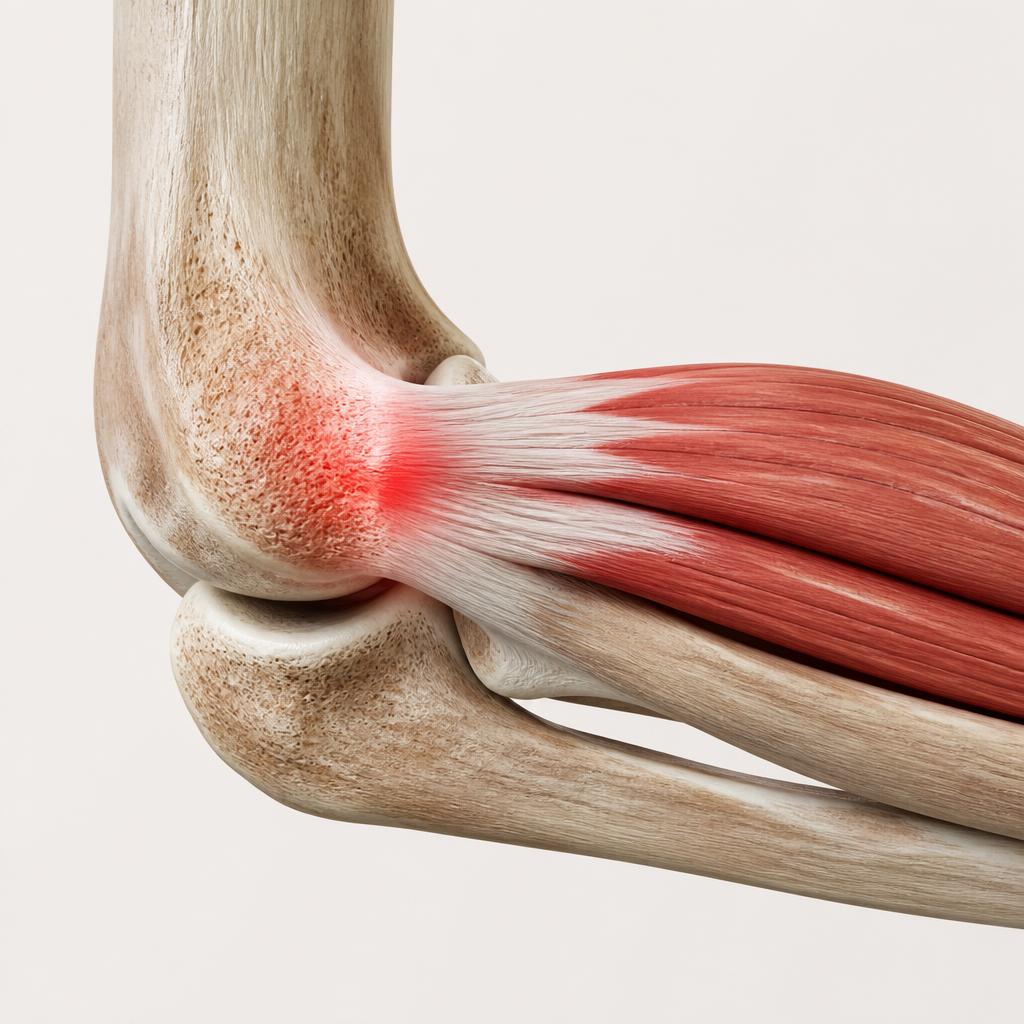
Tendon Overload
Repetitive gripping, lifting, racquet sports, golf, or work demands may place repeated stress on the tendon attachment sites around the elbow.
Muscle & Attachment Sites
The forearm muscles and their attachment points at the elbow may contribute to pain, tenderness, weakness, or discomfort with gripping.
Joint & Movement Mechanics
Elbow, wrist, shoulder, and upper-extremity mechanics may influence how force is distributed during work, exercise, or sport.
Nerve & Referred Factors
Some elbow or forearm symptoms may be influenced by local nerve irritation or referred symptoms from another region.
Different problems can produce similar elbow symptoms, which is why identifying what may be contributing to your pain is so important.
Our Approach
Our goal is to support the body's natural recovery processes while improving strength, movement, load tolerance, and function through an individualized evaluation and care plan.
How we evaluate patients- Evaluate contributors
- Support recovery
- Restore function
These are supportive care goals — not a representation that tendons are regenerated or rebuilt, that degeneration is reversed, or that elbow pain is permanently eliminated.
What you can expect
Personalized Evaluation
An evaluation of your symptom location, history, motion, strength, grip, loading tolerance, and relevant upper-extremity findings.
Honest Recommendations
Recommendations based on your findings, activity demands, goals, and whether our approach appears appropriate for you.
All Options Discussed
A discussion of appropriate supportive options, activity modification, rehabilitation, imaging, or referral when another approach may be more suitable.
Focus on Function
A focus on helping you grip, lift, work, exercise, play sports, and return to the activities that matter to you.
How long does it take?
Every patient responds differently. The timeline below reflects general patterns and is provided for educational purposes only — not as a prediction of individual results.
- 1
First 1–2 weeks
Early care focuses on calming irritation and identifying the gripping, lifting, and sport demands that aggravate the elbow.
- 2
Weeks 2–6
Many patients notice comfort with lighter gripping and daily tasks change first, as gentle forearm and elbow work begins.
- 3
Weeks 6–12
Tolerance for lifting, tool use, training, and sport often continues to change as the elbow handles more load.
- 4
3–6+ months
Progress continues past the last visit, with the focus on maintaining forearm strength and load tolerance for the activities you enjoy.
Hear From Patients Who Were Once Where You Are
Patients describe their own experiences with gripping, lifting, manual work, strength training, golf, racquet sports, and everyday activities.
The individuals featured are sharing their personal experiences. Individual responses to care vary, and these experiences should not be interpreted as a guarantee or representation that another patient will experience the same or similar results.
Answers
Elbow Pain Is Limiting What You Can Do. questions we hear most
Straight answers to what patients ask before their first visit. Don't see yours? Call us — we're happy to talk it through.
Ready to Take the Next Step?
If elbow pain is affecting your work, grip, exercise, golf, racquet sports, or everyday activities, we'd be happy to evaluate what may be contributing and discuss whether our approach — or another appropriate option — makes sense for you.
Related: Wrist & hand pain · Shoulder pain · Neck pain · Shockwave therapy · Laser therapy · PEMF therapy · Our approach · Patient stories
Important information: Information on this page is provided for general educational purposes and is not intended to diagnose, treat, cure, reverse, or prevent disease or injury. Elbow pain can have many possible causes, and some presentations may require imaging, medical evaluation, or referral. Recommendations are made only after an individualized evaluation and when clinically appropriate. No specific outcome is guaranteed, and individual responses to care vary.