
Heel Pain Is Making Every Step Harder.
Let's Find Out What May
Be Contributing.
Pain under the heel — especially with the first steps after rest or with prolonged standing and walking — is often associated with plantar fasciitis, but heel pain can have different contributing factors. Our first goal is to understand your individual pattern before discussing supportive care options.
Serving Raynham, MA and Southeastern Massachusetts.

What Could Be Contributing to Your Heel Pain?
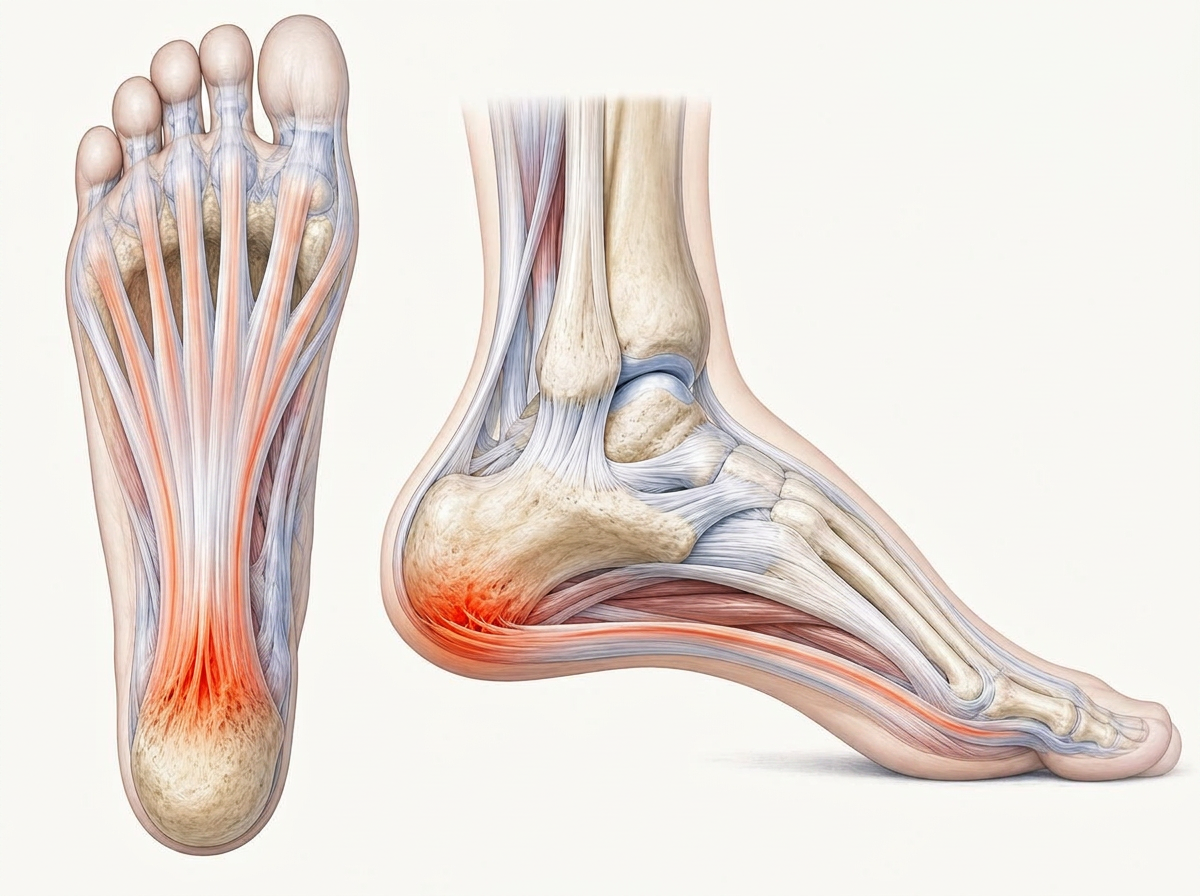
Plantar Fascia
Irritation or changes involving the plantar fascia may contribute to pain near the bottom or inside of the heel.
Calf & Ankle Mobility
Limited ankle mobility or tightness through the calf may influence how forces are transferred through the foot during walking.
Foot Mechanics & Loading
Foot posture, repetitive loading, footwear, activity changes, and prolonged weight-bearing may influence stress through the heel and plantar tissues.
Other Sources of Heel Pain
Nerve irritation, the heel fat pad, bone stress, or other foot and ankle problems can sometimes produce similar symptoms.
Different problems can produce similar heel symptoms. Identifying what may be contributing to your individual pattern helps guide a more appropriate recommendation.
Our Approach
Our goal is to support the body's natural recovery processes while improving mobility, strength, movement, and function through an individualized evaluation and care plan.
How we evaluate patients- Control inflammation
- Support recovery
- Restore function
These are supportive care goals — not a representation that plantar fasciitis or damaged tissue is being cured, regenerated, or permanently corrected.
What you can expect
Personalized Evaluation
A personalized evaluation of your heel symptoms, history, mobility, strength, movement, loading patterns, and relevant findings.
Honest Recommendations
Recommendations based on your findings and goals — not simply the presence of a plantar fasciitis label.
All Options Discussed
A discussion of appropriate options, including referral or co-management when another provider or approach may be more suitable.
Focus on Function
A focus on supporting comfortable movement and helping you work toward walking, standing, exercise, work, and everyday activities.
How long does it take?
Every patient responds differently. The timeline below reflects general patterns and is provided for educational purposes only — not as a prediction of individual results.
- 1
First 1–2 weeks
Early care focuses on calming irritation and identifying the footwear, surfaces, and activity loads that aggravate your heel.
- 2
Weeks 2–6
Many patients notice small changes first — easier first steps in the morning or more comfortable standing. Gentle calf and ankle mobility work begins.
- 3
Weeks 6–12
Strength and tolerance for walking, standing, and exercise often continue to change as the foot handles more daily demand.
- 4
3–6+ months
Progress continues past the last visit, with the focus on maintaining mobility and staying active in the ways that matter most.
Hear From Patients Who Were Once Where You Are
Patients describe their own experiences with first steps in the morning, standing, walking, work, and returning to activity.
The individuals featured are sharing their personal experiences. Individual responses to care vary, and these experiences should not be interpreted as a guarantee or representation that another patient will experience the same or similar results.
Answers
Heel Pain Is Making Every Step Harder. questions we hear most
Straight answers to what patients ask before their first visit. Don't see yours? Call us — we're happy to talk it through.
Ready to Take the Next Step?
If heel pain is affecting your walking, standing, work, exercise, or everyday activities, we'd be happy to evaluate what may be contributing and discuss whether our approach is appropriate for you.
Related: Achilles tendinopathy · Shockwave therapy · Laser therapy · PEMF therapy · Our approach · Patient stories
Important information: Information on this page is provided for general educational purposes and is not intended to diagnose, treat, cure, or prevent disease or injury. Heel pain can have different causes, and some presentations may require medical evaluation or imaging. Recommendations are made only after an individualized evaluation and when clinically appropriate. No specific outcome is guaranteed, and individual responses to care vary.